Select your language

How to reduce communication failures

Managers and officials must understand cultural differences

by Glenn Withiam*

Hotel operators welcome guests from an increasing number of nations and cultures, as barriers to travel shrink and the global economy continues to grow. Along with travelers from different cultures comes the possibility of unintentionally offending these travelers, simply because of cultural misunderstandings.

Daphne Jameson, a professor in Cornell University's School of Hotel Management, has developed a simulation exercise designed to improve cultural knowledge across all areas of the hospitality industry. This simulation seeks to demonstrate universal principles about cultural differences, rather than focusing on a particular culture. The exercise, known as the "cocktail party simulation," is a "party" for three imaginary cultures, which are designated as blue, green, and red.

To illustrate, one of the situations that might arise in this exercise is described below.

As a hotel chain manager, you are offering a cocktail for representatives of a construction company and a bank, your new partners in a joint venture. Things, however, soon start to go wrong when some of your guests show disgust at the delicious tray of fresh vegetables you offer. Worse, when you greet other guests with a friendly and courteous hug, they reject you. Others will never look him in the eye and eventually retreat to what appears to be a kind of prayer session. No wonder the party soon disintegrates and one of the groups retires.

Universal principles

- Publicidad -

From the frustration of divergences in communication during the exercise, Professor Jameson explains that several principles are deduced. These ideas include the following:
•    Cultural values are relative, not absolute;
•    Intercultural communication involves emotional, but also rational, responses;
•    Imperceptible cultural differences, such as values, attitudes and beliefs, are more difficult to manage than visible ones, such as manners, customs and rituals;
•    Deciding who fits whom—and how—is the biggest challenge in cultural interactions, and
•    Cultural identity is multidimensional; it involves much more than nationality.

Jameson developed his tool when he realized that few cross-cultural training materials had a focus on the hospitality industry. Their goal is to provide an economical method to demonstrate how to reduce cultural barriers. In the simulation, participants assume the roles of members of the three companies and are assigned the blue, green or red culture. After learning their new culture, they attend the simulated cocktail that is supposed to open a series of important business meetings concerning a joint partnership in the hospitality industry. Each of the three teams learns about the other cultures completely by accident, as participants enter into business relationships and strive to overcome cultural differences that may impede such relationships.

Cocktail party simulation has been used with good results in administrative development programs in companies, properties, executive training seminars and academic courses. Participants may all belong to a nationality or to a number of cultures, to the extent that they are willing to adopt new fictitious identities as members of the blue, green or red culture.

The simulation exercise is freely accessible at no cost from the Cornell Center for Hospitality Research website, chr.cornell.edu. This paper gives full instructions on how to conduct intercultural simulation and discusses some of the results that Professor Jameson has observed.
______________
*Glenn Withiam is director of publications at Cornell University's Center for Hospitality Research.

No comments

• If you're already registered, please log in first. Your email will not be published.

Comments are closed

The comments for this content are closed.

TecnoEdificios 2026 will open its academic program for smart building professionals in Latin America

TecnoEdificios 2026 will open its academic program for smart building professionals in Latin America

Mexico. The TecnoEdificios 2026 congress presented its academic program aimed at professionals linked to the management, operation and design of smart and efficient buildings in Latin America.

New generative AI feature makes it easier to interpret alerts in building management

New generative AI feature makes it easier to interpret alerts in building management

International. The tool seeks to help facility management teams more clearly understand predictive data and recommendations generated by artificial intelligence, facilitating decision-making and...

Perimeter curtain detector with integrated outdoor camera

Perimeter curtain detector with integrated outdoor camera

International. Ajax Systems announced the launch of the CurtainCam Outdoor HighMount (PhOD) Jeweller, an outdoor curtain-like motion detector that incorporates built-in photo verification.

Metro de Quito, the only Latin American finalist in the international cleaning award

Metro de Quito, the only Latin American finalist in the international cleaning award

Ecuador. The Quito Metro system was selected as the only finalist from Latin America in one of the most important international recognitions in the professional cleaning industry, highlighting the...

New IMEI presidency BOMA defines the strategic vision 2026–2027

New IMEI presidency BOMA defines the strategic vision 2026–2027

Mexico. IMEI BOMA begins a new institutional stage with the arrival of Eng. Ariel Campos Trejo to the presidency for the period 2026-2027, accompanied by Alberto Morett Dosal as executive vice...

Facility Management in Elite Sport

Facility Management in Elite Sport

Spain. The Santiago Bernabéu Stadium, home of Real Madrid, is once again at the centre of the debate on the management of large-scale sports infrastructures.

Latin America seeks to accelerate the adoption of smart buildings

Latin America seeks to accelerate the adoption of smart buildings

Latin America. A new report presented by Siemens and Latinometrics reveals that the region has only 10 smart buildings per million inhabitants and faces the challenge of tripling its modernization...

Digital twins and simulation: keys to decision-making

Digital twins and simulation: keys to decision-making

Latin America. Today's business environment demands speed and accuracy in strategic processes. In this context, digital twins are consolidated as a tool that transforms decision-making.

Clean Air, Clear Mind: How Technology Is Making Life Better at Work

Clean Air, Clear Mind: How Technology Is Making Life Better at Work

Today, ensuring good indoor air quality (IAQ) in offices, shops, and commercial buildings is no longer a luxury, but a necessity. By Diana Ardila

HVAC System

HVAC System

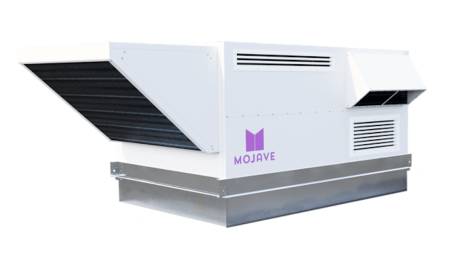
MojaveThe latest version of ArctiDry HP, an easy-to-install, patented liquid desiccant heating, ventilation, and air conditioning (HVAC) system, now includes a heat pump for energy-efficient heating...

Subscribe Here
Remember Me
SUBSCRIBE TO OUR ENGLISH NEWSLETTER.
DO YOU NEED A PRODUCT OR SERVICES QUOTE?
Patrocinado por:
ConsorcioTec Logo
LATEST INTERVIEWS
SITE SPONSORS


LATEST NEWSLETTER
Ultimo Info-Boletin