
 Many hospitality companies train their employees to use the texts in their interactions with customers based on the idea that they will help employees maintain service quality and standards.
 By Glenn Withiam
A new study from Cornell University's Center for Hospitality and Tourism confirms that texts work in some, but not all, service transactions. This study called "service texts: perspective of quality and performance of a client", carried out by professors Liana Victorino, Rohit Verma and Don Wardell, is available, at no cost, at the address: chr.cornell.edu.
Lina Victorino is an assistant professor at Victoria University; Rohit Verma is an associate professor in the Cornell School of Hotel Management; and Don Wardell is a professor in the Eccles School of Business at the University of Utah.
For their experiment, the researchers showed one of six videos to participants in the study. The videos, which were written and recorded specifically for this purpose, featured one of three levels of text for two different service transactions. The transactions were check-in at the hotel reception, which is considered a relatively routine process, or an interaction with a concierge, which implies a service on request. The text levels were: relaxed, moderate and heavy, such texts order the way employees should execute services, specifying words, phrases and gestures, as well as setting deadlines and other expectations for the service process.
One of the most interesting findings was that customers could easily recognize when texts were being used, and could usually tell the level of text in each service interaction. Thus, the authors concluded that when managers use the texts, they must ensure that they actually meet their goal of improving service in the eyes of customers.
For routine check-in at hotels, customers see no difference in quality of service between the three videos, no matter the level of text. Since a process with a lot of text did not interfere with the view of the respondents to the study regarding the quality of service, it makes sense for managers to use text in routine service interactions such as check-ins at hotels. That way, managers can be sure that the hotel's service standards are being met.
This means, for example, that customers are being received in an appropriate way, and that employees remember to oversell (suggestive selling) the services, if that is the purpose of the texts.
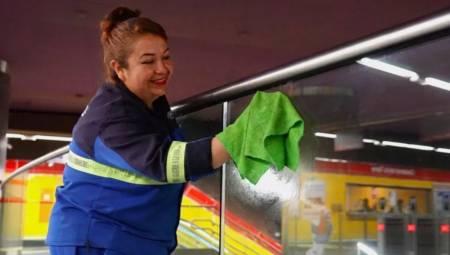
In contrast, the video showing an interaction with the concierge with heavy texts produced an evaluation of poor service by those who responded to the study. At the same time, those who responded to the study thought that moderate or relaxed texts implied a higher quality service in this process. Just to give an example of what relaxed text means, the actress featured in the janitor video was the one who wrote the lines for the relaxed text.
The study's findings call into question the use of heavy texts for on-demand services. Instead of specifying every phrase and gesture, managers can apply texts as rules for their concierges and others who offer on-demand services to their guests. Managers can motivate employees not to follow texts when they think it is necessary, but this means that employees should not be evaluated based on how they stick to the text.
In conclusion, managers should remember that texts can be used to ensure service standards in some situations. When managers do use the texts, their customers will notice them and judge whether any particular text is improving the service or damaging it. Finally, it's the client's view of the text that really matters.
*Glenn Withiam is director of publications at Cornell University's Center for Hotel Research.
Pretitle: Practices that improve hotel management