
 International. The Santa María la Real Foundation installed more than fifty sensors in 80 square meters of the hermitage of Santa Maria de Canduela, a historic building located in Spain, with the aim of being able to contrast there different types of techniques and materials that will allow to continue advancing in the preventive conservation of heritage buildings and in their integral management. The sensors will monitor all the tests carried out on site, also allowing their analysis and control online in real time.
In the heritage sector it is very complex to carry out tests on the buildings or assets on which action is taken and, in this sense, MHSLab (name given to the project), is a pioneering initiative. "It is as if we had a 1x1 scale model to contrast the techniques or materials we use, only in this case, it is a real building with more than 700 years of history", point out from the Foundation.
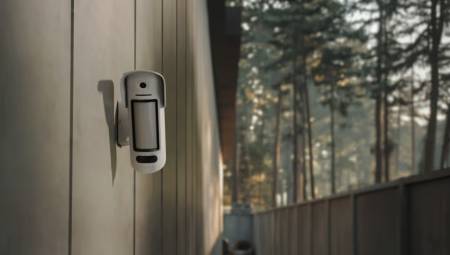
The conditioning of the hermitage for the implementation of this initiative was a challenge. Santa María de Canduela did not have any type of technology, it did not have, for example, electric light. So the first step was to make an installation of LED lighting perfectly adapted to the conditions and typology of the space. In addition, the energy needed for its maintenance is generated cleanly. The hermitage also now has presence detectors and an access control system.
As for the tests carried out, Jesús Castillo Oli, director of Heritage Conservation of the entity, explains that several tests are currently being carried out. For example, a project aimed at analyzing the permeability to liquid water of different adhesives in samples of mural paint on support of lime-based mortars.
Another of the projects evaluates the behavior of capillary humidity in paramentros, depending on the height and location within the building, considering the sources of ventilation, a third studies the behavior of wood embedded in walls, without protection, in direct contact with mortar based on lime.