
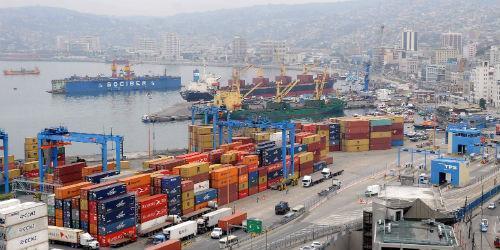
 Latin America. Schneider Electric, an expert in providing comprehensive solutions for the energy, infrastructure, industry, marine, oil, gas, utilities and large data centers segments, knows the importance of energy management, efficient and clean in seaports around the planet, if it is taken into account that more than 90% of world trade uses navigation, with ships of all sizes, for this purpose.
"Most of the world's major cities are located by the sea, and with it these gates allow humanity in general to basically depend on maritime traffic to keep our civilization constantly growing. One of the main pollutants in the ports arises from the need to keep the ship engines operating to manage the internal activities of each ship while they dock at the dock," says Javier Antonio Rodriguez – VIP Energy business and the Andean Zone -Colombia, Ecuador & Venezuela.
"Port administrations must find solutions that meet this demand for energy in a sustainable and environmentally friendly way," emphasizes Javier Antonio Rodríguez. The situation is critical, according to United Nations figures, port traffic generates worldwide 2% of all CO2 emissions, 15% of all emissions of nitrous oxides NOX and 6% of sulfurous oxides SOX.
The challenges to overcome
To understand these figures, we will use an example exposed by the newspaper "The Guardian" of the United Kingdom, which states that a vehicle when traveling 15,000 kilometers on average per year, emits 101 grams of SULFUROUS OXIDES SOX. In an average period of 280 days, the largest cargo ship in the world, with its diesel engines, emits 5,200 tons of the same pollutant, that is, a ship of this type emits more pollutants than 51 million cars per year. This waste, typical of the fuels used by any type of vessel, weakens the calcification processes of mollusks and arthropods, among other species, which completely destroys the maritime food chain.
900 Million tons of CO2 are emitted annually in the Ports of the world, equivalent to 220 thermal generation plants with Coal (Fossil Fuel)
A Cruise of 12MW of power for 8 hours emits 1.2 Tons of nitrous oxides NOX, equivalent to 10,000 cars, also emits 30Kg of PM (Particulate Matter) particles of unburned Diesel fuel equivalent to 6,000 cars.
Another additional fact that shows the seriousness of this situation is that throughout the planet, PM emissions (Non-combustionated Diesel Particles) register 60,000 deaths from lung cancer and cardiorespiratory diseases in the areas near the Ports. Almost €58B is caused by dealing with these particular medical cases (7% of the total budget to the Health of the European Society)
Energy connection for ships
A solution that is imposed on a global scale, due to its efficiency and ease of standardization, is the connection of ships to the port's energy distribution network.
This simple operation considerably reduces the impact on fossil fuel consumption, toxic emissions and carbon footprint, which each ship leaves while spending the night in port. It also reduces side effects to the population that lives near the port by eliminating in inhalations of gases, vibrations and noise of the engines, they also benefit in the case of cruise ships to their passengers, to the crew, and of course the reduction of vibrations in container ships and general cargo ships keep in better condition the merchandise they transport.
Obviously, the task of the ports is to adapt their energy infrastructure without trauma to facilitate the connection of the available electricity distribution lines of the corresponding Electrifier, or from their own sources of electricity generation to the respective electrical connections of the ships for their operation in Port.
According to Javier Antonio Rodríguez, "the work of this operation must be carried out in compliance with the most demanding standards of entities such as the International Standard IEC - ISO - IEEE 80005-1/2/3 that since August 2012 regulates and specifies the common aspects so that the technology is applicable to all fleets of Ships in all seaports of the world.
Shore Connection and ShoreBox: An integrated and intelligent offering from Schneider Electric
Thus, technological evolution allows to meet large-scale needs to solve port problems, and Schneider Electric has invested valuable time and resources to develop Shore Connection, a solution that allows to overcome in an efficient and timely way the challenges of the ports.
This solution allows the quick access of the ships to the clean electrical energy in Port, 100% reduction of noise and vibrations generated by the large Diesel engines of the boats since their engines must remain off.
All these benefits and recommendations to vessels are based on global regulations and standards such as Annex VI of the International Maritime Organization IMO - Marpol, which must be complied with from the first of January this year and has been ratified by 70 countries; also with the requirements established in the Kyoto Protocol (187 signatory countries) - which since February 2005 has established the rates of reduction of greenhouse gases.
In short, from the national electricity grid, or from the Port's own generation sources, an electrical substation (existing or new) is detached and supplies electricity to the ships that keep their engines off. Schneider Electric's ShoreBox solution is implemented to this substation, which transfers the electrical energy necessary for the ship's auxiliary circuits through a flexible electrical connection standardized internationally according to IEC-ISO-IEEE 80005.
ShoreBox as part of Schneider Electric's Shore Connection, is a TVDS (Tested Validated Documented Solution) solution integrated into a compact prefabricated substation, which includes all the technical requirements to meet the requirements of efficient energy management and management, scada systems, DCS reporting, medium and low voltage power, transformers, BMS access control, CCTV video surveillance, as well as provision of upS uninterrupted power, cooling controls, HVAC, among others.
"ShoreBox can meet the demands of all types of ships, from conventional freighters, through container cargo ships, postpanamax and fuel tanks, to high-power cruise ships," says the Schneider Electric expert.
Finally, it is important to highlight that the return on investment of a solution such as Schneider Electric's Shore Connection is guaranteed not only for the port but also for the ships that take advantage of this model, because while the port is generated a new income and very attractive long-term business by selling and marketing energy at a reasonable cost; for ships, fuel consumption is reduced with low sulfur levels (400% higher price than the equivalent in kWH for conventional energies), reduction in the maintenance of their machines for less use of them, reduction in general maintenance of the ship for less vibration affectation. Depending on the management model and funding time, this ROI can be achieved in a few years. Thus, the ports of the coming years will be more efficient, clean, less polluting and less noisy, with the deployment of solutions that are already available and tested by Schneider Electric.