
 Latin America. The World Business Council for Sustainable Development (WBCSD) points out that companies need to produce more with less, to make greater profits and impact the planet less. That is eco-efficiency.
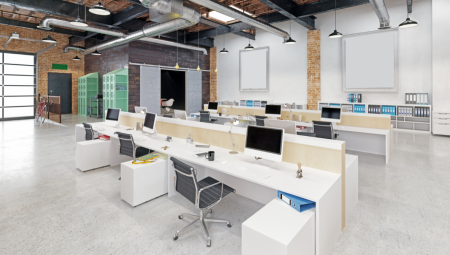
Thus, companies that have as headquarters huge buildings around the world are taking to the letter this concept that translates into savings from the daily movement of the office: better use of paper, energy, water and waste management, among others.
All this "increases competitiveness, reduces the waste of resources, reduces the volume and danger in the generation of waste, reduces energy consumption and the generation of polluting emissions, reduces the costs of the company and favors the sustainability policy," says the Eco-efficiency guide in offices and buildings, prepared by the Business Confederation of the Province of Alicante -Coepa- in Spain.
These are some practices that in addition to allowing the saving of resources help health.
Energy
- Do not use hand dryer, better paper towels.
- Turn off the bulbs you do not need. Those who come out at the end have more responsibility in it.
- Pledge the areas of the office that are necessary.
- Computers, printers and photocopiers must be turned off at night and on weekends.
- If you require the computer to turn on, but you are not going to use it, turn off the screen.
- Set the black screen saver to activate every 10 minutes.
- Avoid using air conditioning and open the windows.
- Turn off the air conditioning when the office is empty.
- Program the air conditioning and heating thermostats to the recommended temperatures (23-25ºC on hot days and 20-22ºC on rainy days).
Water
- Close the taps tightly. A dripping faucet wastes 80 liters of water a day (automating can be a solution).
- Report water leaks in bathrooms or taps to be repaired immediately.
- Use the necessary water to wash your hands. Thirty seconds is enough.
General practices
- Promote the care of the environment in your e-mail signature.
- Avoid the elevator, better go up and down the stairs.
- Use the ink saving function and print in black and white or draft, and on both sides.
- Check the content that you will avoid printing so that you do not print something that is not required.
- Increase and promote the use of recycled paper.
It is in the interest of SMEs to:
- In SMEs, the most relevant types of energy consumption are: lighting, air conditioning and heating.
- Proper use of energy by SMEs can lead to a 10% reduction in energy consumption and a 22% reduction in emissions.
- Lighting accounts for approximately 15% of total electricity consumption.