
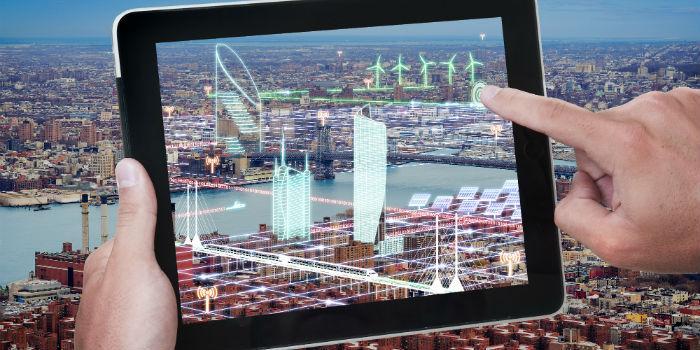
 Colombia. The previous year the company Autodesk made it clear that BIM (Building Information Modeling) will be the connection between the design, construction and operation of the future. Adopted worldwide by governments and architecture, engineering and construction companies thanks to its capabilities to reduce costs and improve quality.
How does BIM stand in an era where connectivity is ubiquitous? Why should we be connected with BIM?
Today's technologies that support advanced BIM processes create a disruptor in the way infrastructure and buildings are designed, built and used. However, for some architects, engineers, contractors and owners, adopting new processes and technologies remains a fearful proposition that requires:
- Train teams
- Have faith in the cloud
- Make the necessary transition from your 2D comfort zone to the world of 3D and BIM models
It has been demonstrated how the workflows carried out in BIM allow to do the work in an easier way, to innovate and capitalize on new business opportunities, through:
Connect values: In the first phase of design it allows us to capture, create and calculate huge amounts of data and evaluate alternatives in a real context. Enabled by cloud, mobility and generative design, virtual and augmented reality technologies, software is becoming an advisor in the design and engineering process, optimizing designs and helping teams make decisions in a fraction of the time.
Connect deliverables: Integrate design to manufacturing to make the construction process more transparent. Extend digitalization to the construction site, with sensors, drones, smart machines and mobile devices enabled by a BIM-connected cloud platform. Seamless integration of design and construction processes translates into savings of time and money.
Connect assets: Huge amounts of data are available, and connected technology helps make data useful throughout a project's lifecycle. Learn from operational data collected throughout its lifecycle for continuous improvement of decision making. Collect data through sensors and connected devices (Internet of Things) to inform maintenance decisions, more efficient and adaptable operations, and design improvements.
Connect Teams: Centralize the project from the beginning. Stay up to date in the office and project job site, using the cloud, data, and connected systems to unlock capabilities to seamlessly share and collaborate throughout the project lifecycle. As alliances become more prevalent in the industry, Autodesk helps connect teams, whether they're in different parts of the city or in different cities.
"If there is a key moment to start using BIM, it is now. Architects, Engineers and Builders must adopt this methodology and adapt to these changes in order to improve efficiency, prediction and above all the quality of work." It is the message that Ivana Kermen, Technical Specialist in the area of architecture, engineering and construction at Autodesk LATAM, gives to all industry professionals around the world.