
 Colombia. While companies in all sectors exploit the benefits offered by cloud computing, they have also had to learn that this strategy does not come without disadvantages. In many cases, cloud computing is a centralized architecture and is based on companies that have one or more reliable connections to the data centers where the infrastructure is located.
Schneider Electric says that for some organizations, that kind of centralized single point can become problematic from a risk perspective. To avoid this, one solution is to use edge computing and thus increase the style of a centralized cloud platform.
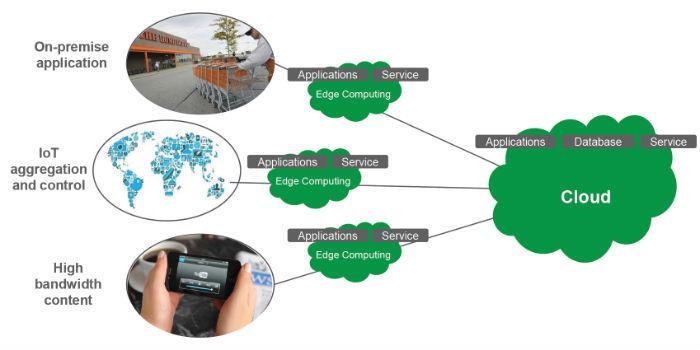
Edge computing involves placing computational power, control, storage, and applications closer to the end users who are using it. It can be deployed on a private network or as part of a larger cloud based on internet or computational architecture.
The strategic use of edge computing can transform a cloud computing implementation from a fully centralized architecture to a more distributed one. This means that any disruption would be limited only to that point on the network where it occurred, rather than the full cloud deployment.
With a traditional centralized cloud architecture, a distributed denial of service (DDoS) attack or power outage in the cloud data center could render applications unavailable to all users, disrupting services. But when using an Edge architecture, any such disruption would be limited to the Edge computing device and local applications on that device.
Enterprises have a few options for how they can employ edge computing to bring more resiliency to a cloud deployment.
That's why a hybrid strategy using simple devices to support specific, defined applications is quite positive. An example is a Cloud Storage Gateway, which is an on-premises device that acts as a network server that translates cloud storage application programming interfaces (APIs) such as SOAP or REST.
Using the Gateway allows users to integrate cloud storage into their applications without actually moving applications to the cloud.
Schneider Electric understands that to go a step further, micro data centers of 10 racks or less must be used. Such solutions are often available as pre-designed or on-demand configuration systems that can be mounted on site. Another option is that they can be fully prefabricated micro data centers mounted on a production floor in a single enclosure and simply taken to the place where it will operate.
These single-enclosure systems also come in robust versions that can withstand harsh environmental conditions. Either way, the idea is to replicate some applications and storage from the centralized cloud platform to increase resiliency and improve response times for on-premises users.
A third option is to employ a number of regional data centers. These are larger facilities, with 10 racks or more, that have more processing and storage capacity than a micro data center. But the idea is the same: to allow applications and cloud storage to live closer to the users who employ them, to improve response time and also add another layer of reliability and resiliency.
Cloud computing brings some significant advantages to businesses of all sizes, including greater agility and often lower cost. Combining the cloud with an Edge blending strategy can bring more benefits, including improved reliability and faster response times. Find out more about Edge Computing in https://goo.gl/KAfRHz.