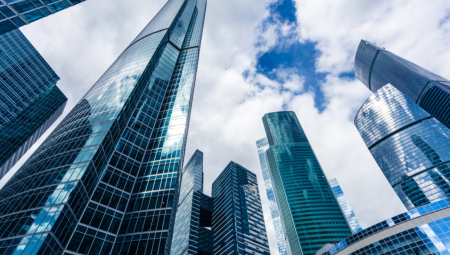

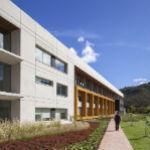
 Colombia. The number 3 building of the corporate complex of the food company Alpina in Sopó (Colombia) has just received LEED gold level certification. The works that meant the certification already result, among others, a reduction in 72% of drinking water consumption outdoors and 65% indoors; as well as a 32% reduction in its energy costs compared to a conventional building.
The design established that 25% of the total area intervened was for the construction of ecological gardens and trails and during construction, waste management was optimal: 94% of the solid waste generated during the work, other than excavation material, was diverted to recycling and reuse processes.
The project whose architectural design and advice for LEED certification was in charge of Arpro Arquitectos Ingenieros, had an exemplary performance in the following areas:
Maximization of green areas and habitat preservation: 25% of the total area intervened was for the construction of gardens and ecological trails, using only natural species typical of the Bogotá savannah which require very low maintenance.
Rainwater management: In addition to the preservation of green areas, to maintain the natural hydrological cycle and control runoff, the project incorporated a rainwater collection system on deck, which is used to discharge sanitary appliances and irrigation of landscaping.
Saving drinking water: With the proper selection of species, and implementation of a drip irrigation system that is supplied with rainwater, the project estimates a 72% reduction in outdoor drinking water consumption. On the other hand, indoor savings of 65% are expected, thanks to a rigorous selection of low-consumption devices as well as the use of rainwater in the discharge of urinals and toilets.
Energy savings: The building is expected to present in its operation a 32% reduction in its energy costs compared to a conventional building of the same conditions. This was supported by a computer simulation that analyzes, among other aspects, the orientation of the building with respect to the sun, the materials used, the artificial lighting systems and their associated controls, and the efficiency in the mechanical HVAC systems (Ventilation, heating, air conditioning).
Improved Commissioning: The project had a specialized team in charge of verifying the installation, calibration and commissioning of the building's energy systems, in order to ensure compliance with the objectives in terms of energy savings as well as the expectations of operation by the owner.
Waste management in construction: 94% of the solid waste generated during the work, other than excavation material, was diverted to recycling and reuse processes through agreements with local recycling companies, thus prolonging the useful life of these materials as well as reducing the burden of landfills and dumps.
Indoor air quality: The project employs a mechanical ventilation system with double filtration level, to ensure an injection of fresh air free of contaminants and possible odors. Additionally, a rigorous on-site control was developed to control the impact on air quality, through the containment of polluting activities such as the sanding of the drywall and protection of the entire system of ducts, grids and equipment of the HVAC system.
Finally, VOC-free finishes (Chemical components harmful to health) were used, both in paints and coatings of walls and ceilings as well as in the finishing of the floors, for which a material was used from woven vinyl which is not only certified as low emission but also has a high content of recycled material and is 100% recyclable.