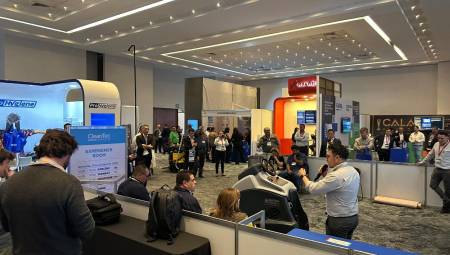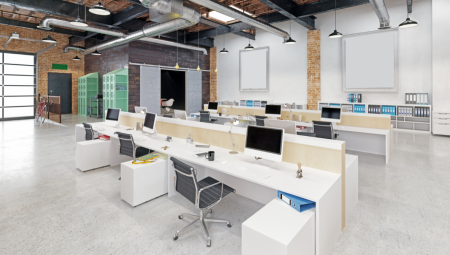

 The Spanish Society of Facility Management held the VIII IFMA Spain Workplace Summit at the new corporate headquarters of Vodafone Spain, in which experts from the sector have addressed the latest trends in workspaces and their influence on the productivity and well-being of employees.
As reported by Ifema, more than 200 attendees gathered at this annual event to know "first-hand" all the advances and new projects that are being developed in our country.
After the opening ceremony, which was carried out by the president of IFMA Spain, Vicente Redondo, and the director of FM & RE Vodafone, Gonzalo Delgado, who pointed out the importance of the role of the facility manager in the management of spaces and its influence on the productivity of employees, Muriel Altunaga, Head of Workplaces Department, intervened. who highlighted the role of new technologies.
A very present theme in the event has been the implementation of the facility manager in the public administration. IFMA Spain has had an impact on this area, referring to the savings that the population could suppose to carry out a correct management of their public buildings.
The Undersecretary of the Ministry of Economy and Competitiveness of Spain, Miguel Temboury, explained in his presentation the success story of the rehabilitation of the Cuzco Tower, in which two fundamental objectives were set: cost reduction and optimization of spaces.
The investment of the project has involved a cost of 25.5 million euros, recoverable in less than 3 years, thanks to the expansion of more than 2,500 useful square meters, translated into 800 jobs.
The money saved will be invested in the renovation of the property of the former chancellery in Paris to install the Economic and Commercial Office that is currently located in a rented building.
Another of the topics discussed has been 'The influence and needs of the new generations in the ways of working'. In this presentation, Carlota Pascual, director of the Millennials Commission of IFMA Spain, wanted to highlight the importance that this generation has in the revolution of new workspaces.
Regarding the workspace, Pascual said that for the new generations this is conceived not as a physical space, but virtual through the Internet. Technological evolution has made it possible to transform this conception, much more evident to these young people, allowing the employee to perform their functions from anywhere.
Continuing in this line, Carlota Pascual emphasized issues such as the smart office, or the comfortable design of public and private spaces that allow improving productivity and adapting it to the needs of each generation.
The VIII edition of IFMA Spain Workplace Summit, also had several success stories in these fields told in first person by small, medium and large companies such as Espacio Aretha, Lukkap Spain, Sunedison, Xerox, ISS, Ricoh Thales Group, or Vodafone.
To end the event, a space for debate was opened on 'Architecture and more human and productive workspaces in organizations', where various opinions on new technologies, the creation of intelligent buildings and the origin of "bad workspaces" were exposed.