
 The report '10 Hospitality Technology Trends', prepared by Smartbrief Media Services and the Wall Street Journal, points out the 10 technological trends that hotels should apply to attract today's customer, increasingly adapted to the latest technologies.
1.- Autonomy of the devices
Customers often travel with their own technological devices and often do so with more than one. The hotel must facilitate the possibility of connecting them with the elements available in the establishment, either the mobile with the television or facilitating access to the wifi.
Without forgetting that the rooms are the space of the hotels in which customers value access to technological services more positively.
2.- Automation of services
More and more customers prefer to use automated services when booking, hiring room service or making use of any of the hotel services. The automation of processes through check-in kiosks or online applications are increasingly common trends in hotels.
3.- Devices adapted to personalized needs
Many hotels make it easy for their customers to use smartphones, tablets, e-books and other pre-programmed devices with leisure and entertainment content such as magazines, newspapers, movies, novels, etc. In fact, they are some of the rare and creative amenities that are the new trend in USA hotels, according to HOSTELTUR tourism news.
They also create value-added applications for the guest. This is the case of hotel employees who guide tourists through an app.
4.- The hotel lobby as a technological hub
After the room, the lobby is the area of the hotel where the investment in technology is most important. Touch screens, availability of video games or virtual concierge services are some of the novelties that some establishments are implementing. Proof of this is that Novotel's virtual concierge has arrived in Spain.
5.- Free Wi-Fi
Free access to Wi-Fi has become a fundamental requirement for hotels, especially those that want to attract a young and connected audience.
Recently Fabián González wondered if wi-Fi in hotels should be free or paid, while Xavi Canalis argued that it is neither infrastructure nor amenity, but a sales channel. In fact, it has been proven that free Wi-Fi increases the client's spending on hotel services. Despite this, free Wi-Fi is still the unfinished business of Spanish hotels.
6.- The office outside the office
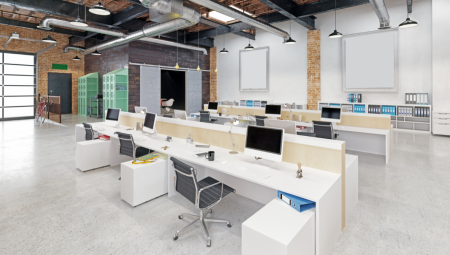
In order to attract business tourists, establishments must offer services that facilitate office work within the hotel. The possibility of reserving spaces to hold meetings or access to multimedia devices to make presentations are some of the services already offered by some of them.
7.- Social networks
The presence on social networks is essential for the hotel to be able to approach its most technological customers. In fact, the investment in social networks reinforces the hotel's income and is one of the strategies of hoteliers to reduce dependence on OTAs.
8.- Technology as a luxury concept
Technology can also be a differential value that positions the hotel as a luxury accommodation. High-definition screens included in the mirrors themselves, personalized music download services according to the tastes of the client and endless technological possibilities can help make a difference.
9.- Technological spaces for events
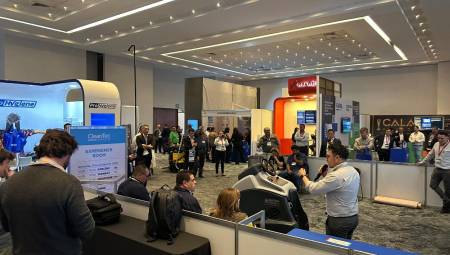
The space reserved for the celebration of events, whether it is an assembly hall or an outdoor garden, must have all the services to offer maximum connectivity of the attendees. Some hotels have developed specific applications for planning meetings on their premises.
Others, such as Ushuaïa Ibiza Beach, allow their customers to pay for their consumption and access their profile on social networks through their fingerprints, as was evident in 'Palladium Hotel Group: social networks are a not inconsiderable sales channel'.
10.- Digital replaces paper
Digital is replacing paper, also in the hotel's signage. The signs and indications of the facilities give way to LCD screens, interactive kiosks or mobile devices. Not in vain a study by the ITH (Hotel Technology Institute) has confirmed that dispensing with paper saves 19% of the time spent on operational management in hotels.