

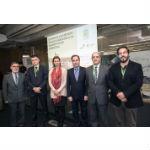
 International. About seventy people from sectors such as construction, environment, administration and different professionals, gathered at the Official College of Architects of Madrid to learn the conclusions of the "Study of fiscal measures associated with energy rehabilitation" organized by the La Casa que Ahorra Foundation.
The president of the La Casa que Ahorra Foundation, Pedro Luis Fernández Cano, explained that the objective they have pursued with this work, carried out by CENER and Pricewaterhouse Cooper (PwC), has been the preparation of a study of tax proposals (VAT, Personal Income Tax, ITP and IBI) to be proposed to the Government for the promotion of energy-efficient building, both in new construction and in existing buildings through rehabilitation.
And all this motivated by the lack of public awareness in relation to energy efficiency, the lack of measures to promote energy efficiency and the lack of compliance with the regulations. But also raise awareness among all sectors about energy efficiency, inform about benefits and encourage actions aimed at rehabilitation. Without forgetting to raise these issues with the General Administration of the State, the autonomies and local entities, the implementation of certain fiscal measures and promote employment, boost economy and increase comfort.
Among the presentations presented, which generated some interesting conclusions in the debate held later, the one that found the most emphasis was the one presented by Alberto Monreal and Jordi Esteve, partner and director of PwC, respectively. The objective of his study was to estimate the economic and fiscal impact of the tax measures proposed by the La Casa que Ahorra Foundation.
These speakers highlighted in their speech "Proposal of fiscal measures for the revitalization of the building rehabilitation sector" that the application of the proposed measures could increase GDP in one year by 1,606.23 million euros; generate 37,092 jobs; a fiscal impact of EUR 508.7 million; energy savings of €71.58 million; a reduction in emissions of 350,227 million tonnes; an external dependence on energy that would be reduced by 27,494 Tep and applied by a total of 108,448 homes.
These measures, explained the PwC speakers, aim to enhance competitiveness, innovation, economic growth and job creation, in particular: incentivise both the acquisition of energy-efficient homes, as well as their renovation and repair; reduce energy dependence, reduce environmental impact and increase savings for families; and to strengthen, in an effective manner, the fight against tax fraud in this sector.
In addition, this meeting was completed with the intervention of Florencio Manteca, director of the Department of Building Energy of CENER and María Fernández Boneta, also a member of that department, since the La Casa que Ahorra Foundation requested from this organization a study on the costs associated with the rehabilitation of homes. The speakers stressed that the necessary investment is 150%-250% higher in the case of a single-family home compared to a block house. Specifically, in the case of reaching a "B" from the base case "E", the set of specific measures applied to each case have resulted in 39,326 million euros for single-family housing compared to 12,399 million euros on average for collective housing.
Another of the conclusions presented is that the cost escalation is not linear, but that the slope increases when it comes to opting for better ratings (from C to A), having to make a greater economic effort by having to implement a greater number of higher cost measures, including high efficiency facilities. We must also add the logical differences between the different climatic zones, which induce the implementation of more or less demanding packages of measures.