Select your language

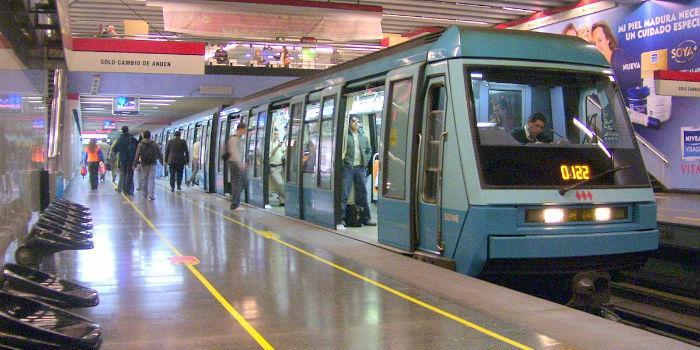
Santiago Metro will save energy thanks to software developed by Universidad de Chile

Chile. A team of experts from the University of Chile developed software that simulates and models the energy expenditure of metro systems. 

It was licensed so that it can be used by rail transport operators, builders, engineering companies and universities. The project also seeks to generate electricity through the installation of solar panels on platforms and urban railway stations.

To move the trains that circulate through the Santiago Metro network, 2.5% of the electrical energy used by the capital is used. 70% of this percentage goes to running the machines and 30% to other needs such as air conditioning, lighting, operation of boxes, commerce, food and drink vending machines, ATMs and station commerce.

Therefore, any savings that can be made in energy expenditure have a great impact on the final balance of companies or on the improvement of their services, by freeing up resources that can be redirected to the improvement of infrastructure, security, air conditioning and attention to the public.

- Publicidad -

Achieving these advances in energy efficiency was the objective of the project 'Optimal integration of solar energy in the planning and operation of urban rail public transport systems', developed by researchers from the Center for Mathematical Modeling (CMM), the Energy Center and the Solar Energy Center of the University of Chile.

The program seeks to improve the planning of operations and the conduction of the urban railway to use less energy, something key, given that the greatest consumption occurs when starting and braking the trains. The technology also seeks to contribute to improving passenger comfort through temperature and humidity control.

Currently, the program is already being installed on Leftraru, the most powerful supercomputer in Chile run by the National High Performance Computing Laboratory hosted in the same CMM.

One of the project's engineers, Paula Uribe, evidenced how the software works from a simulation of the movement of trains along a metro line. This he mentioned in a statement to FayerWayer:

Peaks in power or energy consumption are always when accelerating. Reducing them impacts the electricity bill that Metro will pay. Peaks are expensive, so it is desirable that there are none.

In a closing seminar of the project, Jorge Amaya, another expert of the group, recalled the beginnings of Osiris, as they called the software: "It was a project that we carried out with the Metro systems of the European Union, where more than 17 partners participated in which the MWC was the only non-European (...) The consortium sought to save up to 5% in energy expenditure in the meters," he said.

Likewise, researchers from the Energy Center have addressed the possibility of generating energy through the installation of solar panels covering outdoor roads or Metro stations. This power could be used to power air conditioning equipment and other services, since Santiago has the advantage that a large part of the roads that are on the surface are parallel to the mountain range, so they can receive solar radiation for a good part of the day.

Santiago Jaramillo
Santiago JaramilloEmail: [email protected]
Editor
Comunicador social y periodista con más de 15 años de trayectoria en medios digitales e impresos especializados para América Latina. Actualmente Editor de las revistas Ventas de Seguridad, Gerencia de Edificios y Coordinador académico del Congreso TecnoEdificios.

No comments

• If you're already registered, please log in first. Your email will not be published.

Leave your comment

In reply to Some User
TecnoEdificios 2026 will open its academic program for smart building professionals in Latin America

TecnoEdificios 2026 will open its academic program for smart building professionals in Latin America

Mexico. The TecnoEdificios 2026 congress presented its academic program aimed at professionals linked to the management, operation and design of smart and efficient buildings in Latin America.

New generative AI feature makes it easier to interpret alerts in building management

New generative AI feature makes it easier to interpret alerts in building management

International. The tool seeks to help facility management teams more clearly understand predictive data and recommendations generated by artificial intelligence, facilitating decision-making and...

Perimeter curtain detector with integrated outdoor camera

Perimeter curtain detector with integrated outdoor camera

International. Ajax Systems announced the launch of the CurtainCam Outdoor HighMount (PhOD) Jeweller, an outdoor curtain-like motion detector that incorporates built-in photo verification.

Metro de Quito, the only Latin American finalist in the international cleaning award

Metro de Quito, the only Latin American finalist in the international cleaning award

Ecuador. The Quito Metro system was selected as the only finalist from Latin America in one of the most important international recognitions in the professional cleaning industry, highlighting the...

New IMEI presidency BOMA defines the strategic vision 2026–2027

New IMEI presidency BOMA defines the strategic vision 2026–2027

Mexico. IMEI BOMA begins a new institutional stage with the arrival of Eng. Ariel Campos Trejo to the presidency for the period 2026-2027, accompanied by Alberto Morett Dosal as executive vice...

Facility Management in Elite Sport

Facility Management in Elite Sport

Spain. The Santiago Bernabéu Stadium, home of Real Madrid, is once again at the centre of the debate on the management of large-scale sports infrastructures.

Latin America seeks to accelerate the adoption of smart buildings

Latin America seeks to accelerate the adoption of smart buildings

Latin America. A new report presented by Siemens and Latinometrics reveals that the region has only 10 smart buildings per million inhabitants and faces the challenge of tripling its modernization...

Digital twins and simulation: keys to decision-making

Digital twins and simulation: keys to decision-making

Latin America. Today's business environment demands speed and accuracy in strategic processes. In this context, digital twins are consolidated as a tool that transforms decision-making.

Clean Air, Clear Mind: How Technology Is Making Life Better at Work

Clean Air, Clear Mind: How Technology Is Making Life Better at Work

Today, ensuring good indoor air quality (IAQ) in offices, shops, and commercial buildings is no longer a luxury, but a necessity. By Diana Ardila

HVAC System

HVAC System

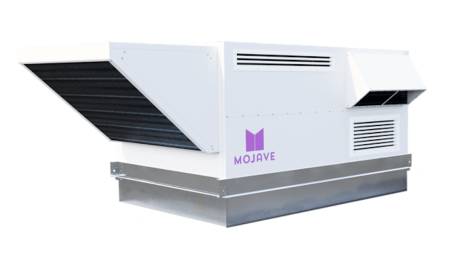
MojaveThe latest version of ArctiDry HP, an easy-to-install, patented liquid desiccant heating, ventilation, and air conditioning (HVAC) system, now includes a heat pump for energy-efficient heating...

Subscribe Here
Remember Me
SUBSCRIBE TO OUR ENGLISH NEWSLETTER.
DO YOU NEED A PRODUCT OR SERVICES QUOTE?
Patrocinado por:
ConsorcioTec Logo
LATEST INTERVIEWS
SITE SPONSORS


LATEST NEWSLETTER
Ultimo Info-Boletin