Select your language

Aggressive plan against Covid minimized infections in American university

Covid Universidad de DukeUnited States. An aggressive COVID-19 surveillance and testing effort at Duke University was highly effective in minimizing the spread of the disease among students on campus, according to a case study.

Duke's successful campaign was launched before the start of the semester. Before arriving on campus, all enrolled students were required to quarantine themselves for 14 days, sign a code of conduct that committed to obey mask-wearing and social distancing guidelines, and get tested for COVID.

Once classes began, the university conducted periodic surveillance testing using pooled samples to conserve resources, daily symptom self-monitoring, quarantined contact tracing, and periodic testing for those who had symptoms or had been exposed to someone with COVID-19.

The result: the average prevalence of infection per capita among students was lower than in the surrounding community, and large outbreaks observed on other campuses were avoided. Overall, the combined testing approaches identified 84 cases among students, with 51% among asymptomatic people.

- Publicidad -

"Our experience at Duke shows that combined risk reduction strategies and surveillance testing can significantly reduce transmissions on college campuses and beyond," said senior author Thomas Denny, a professor of medicine at Duke University School of Medicine and chief operating officer at the Duke Human Vaccines Institute.

Denny said Duke's experience was based on a combination of strategies. In addition to testing and quarantine before students arrived on campus, measures included:

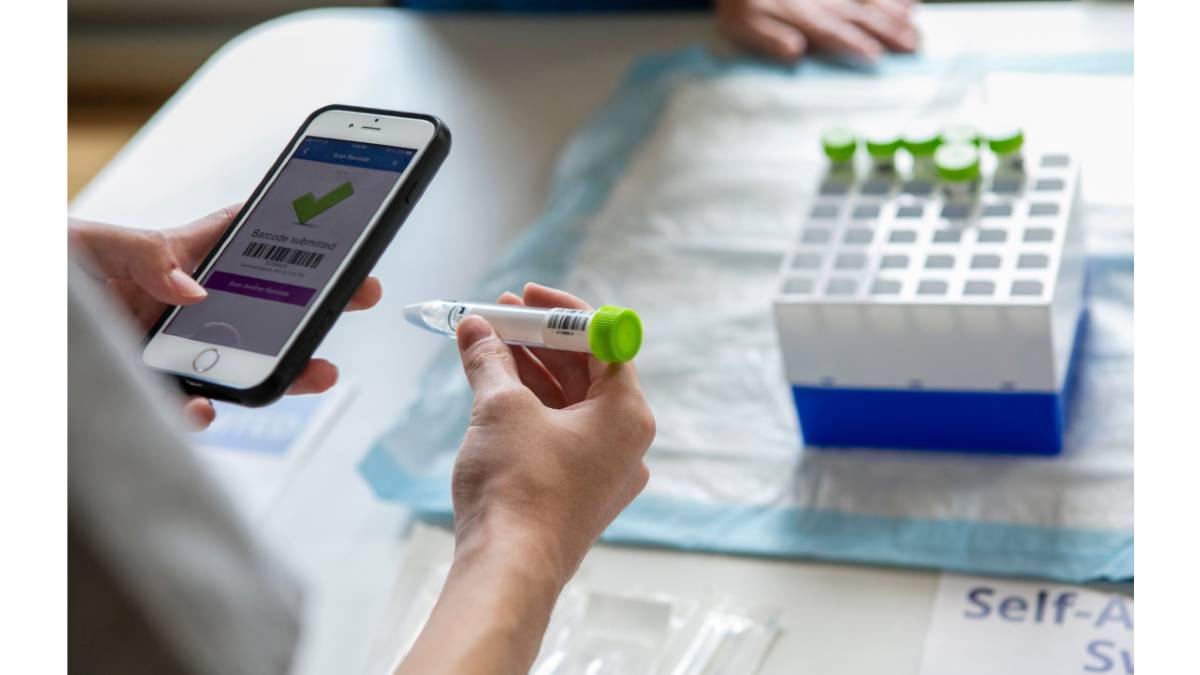
  • Creation of a smartphone app for self-monitoring and daily symptom reporting;
  • Have students living on campus test themselves twice a week, using kits with pre-labeled containers, swabs, and sample bags; off-campus students assessed at least once a week;
  • Strategically locate sites across campus to collect student test samples;
  • Grouping of samples in a process called a combined test, with five samples pooled and analyzed for the presence of the virus. Batches that registered positives were divided into individual samples and analyzed separately to identify the source of the positive. The Duke Human Vaccine Institute processed 80,000 samples from August to October.

"At the end of the summer, there were still things we didn't fully understand about SARS-CoV-2 transmission, so there was some uncertainty in the fall semester," said Steve Haase, an associate professor in Duke's departments of Biology and Medicine. "Over the course of the semester, we've learned a lot of things, including that it's possible to limit the spread of the virus and create a safer environment for our students to have that invaluable learning experience on campus."

"Thanks to the collaboration of literally hundreds of dedicated people, along with the high level of engagement of our students, we've had a very positive drop," said co-author Kyle Cavanaugh, vice president of administration at Duke University. "Our dynamic surveillance testing strategy has served as a key component of our experience that has also included high compliance with masking, social distancing, and other key public health behaviors."

Source: Duke University.

Duván Chaverra Agudelo
Duván Chaverra AgudeloEmail: [email protected]
Editor Jefe
Jefe Editorial en Latin Press, Inc,. Comunicador Social y Periodista con experiencia de más de 12 años en medios de comunicación. Apasionado por la tecnología. Director Académico del Congreso RefriAméricas.

No comments

• If you're already registered, please log in first. Your email will not be published.

Leave your comment

In reply to Some User
TecnoEdificios 2026 will open its academic program for smart building professionals in Latin America

TecnoEdificios 2026 will open its academic program for smart building professionals in Latin America

Mexico. The TecnoEdificios 2026 congress presented its academic program aimed at professionals linked to the management, operation and design of smart and efficient buildings in Latin America.

New generative AI feature makes it easier to interpret alerts in building management

New generative AI feature makes it easier to interpret alerts in building management

International. The tool seeks to help facility management teams more clearly understand predictive data and recommendations generated by artificial intelligence, facilitating decision-making and...

Perimeter curtain detector with integrated outdoor camera

Perimeter curtain detector with integrated outdoor camera

International. Ajax Systems announced the launch of the CurtainCam Outdoor HighMount (PhOD) Jeweller, an outdoor curtain-like motion detector that incorporates built-in photo verification.

Metro de Quito, the only Latin American finalist in the international cleaning award

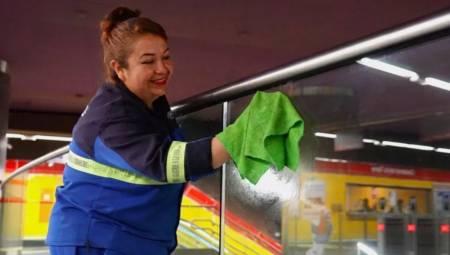
Metro de Quito, the only Latin American finalist in the international cleaning award

Ecuador. The Quito Metro system was selected as the only finalist from Latin America in one of the most important international recognitions in the professional cleaning industry, highlighting the...

New IMEI presidency BOMA defines the strategic vision 2026–2027

New IMEI presidency BOMA defines the strategic vision 2026–2027

Mexico. IMEI BOMA begins a new institutional stage with the arrival of Eng. Ariel Campos Trejo to the presidency for the period 2026-2027, accompanied by Alberto Morett Dosal as executive vice...

Facility Management in Elite Sport

Facility Management in Elite Sport

Spain. The Santiago Bernabéu Stadium, home of Real Madrid, is once again at the centre of the debate on the management of large-scale sports infrastructures.

Latin America seeks to accelerate the adoption of smart buildings

Latin America seeks to accelerate the adoption of smart buildings

Latin America. A new report presented by Siemens and Latinometrics reveals that the region has only 10 smart buildings per million inhabitants and faces the challenge of tripling its modernization...

Digital twins and simulation: keys to decision-making

Digital twins and simulation: keys to decision-making

Latin America. Today's business environment demands speed and accuracy in strategic processes. In this context, digital twins are consolidated as a tool that transforms decision-making.

Clean Air, Clear Mind: How Technology Is Making Life Better at Work

Clean Air, Clear Mind: How Technology Is Making Life Better at Work

Today, ensuring good indoor air quality (IAQ) in offices, shops, and commercial buildings is no longer a luxury, but a necessity. By Diana Ardila

HVAC System

HVAC System

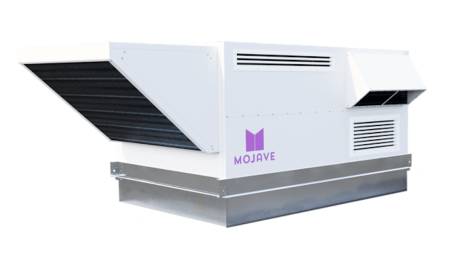
MojaveThe latest version of ArctiDry HP, an easy-to-install, patented liquid desiccant heating, ventilation, and air conditioning (HVAC) system, now includes a heat pump for energy-efficient heating...

Subscribe Here
Remember Me
SUBSCRIBE TO OUR ENGLISH NEWSLETTER.
DO YOU NEED A PRODUCT OR SERVICES QUOTE?
Patrocinado por:
ConsorcioTec Logo
LATEST INTERVIEWS
SITE SPONSORS


LATEST NEWSLETTER
Ultimo Info-Boletin