
 International. The city of Ávila has been chosen for the implementation of the Smart Heritage City (SHCity) project, aimed at improving the management and conservation of historic centres in Europe, as well as facilitating their tourist dynamization.
SHCity is a European transnational cooperation project, developed within the framework of the Interreg V Sudoe programme. The initiative, in which the Santa María la Real Foundation of Historical Heritage participates together with the AIDIMME Technological Institute, CARTIF Technological Center, Faculty of Sciences and Technology of the Nova University of Lisbon, NOBATEK, TECNALIA and the City Council of Ávila.
The consortium that integrates SHCity will work for the next 30 months on the development of a system that will allow online control, intelligent management and preventive conservation of a set of buildings or heritage elements, based on the use of new technologies and the installation of wireless sensors. In addition, it will include an application aimed at improving the control of tourist visits.
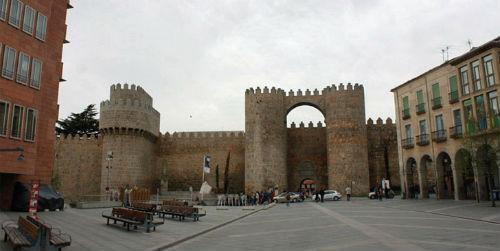
Ávila has been chosen for the start-up and validation of the project because it is a city that has been declared a World Heritage Site by UNESCO, because it has been committed to the intelligent management and conservation of its heritage for years and because it is part of the Spanish Network of Smart Cities. Reasons to which is added the willingness always shown by the city council that, in fact, collaborates directly in the development of the project.
The historic center of the walled city will be the pilot space where the researchers and technicians of the SHCity project, developed within the framework of the European Interreg V Sudoe program, will address the challenge of creating a unique open source tool that facilitates the management and tourism dynamization of historic urban centers. A system exportable to other places, which will serve to move from the intelligent management of monuments or isolated buildings to that of cultural spaces or monumental complexes.
The solution that will be developed in the project will integrate data collected by sensor networks deployed in the urban complex, with the purpose of controlling and responding to the elements of natural and anthropic risk that affect buildings and their surroundings, the management of energy consumption and the control and management of the flow of visitors. This technological solution will be based on a set of tools developed through the use of ICT technologies and expert knowledge from different fields related to heritage management on an urban scale.