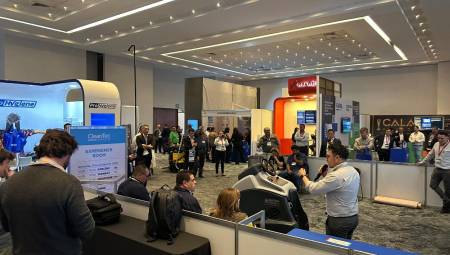

Argentina.  Convened by CBRE Argentina and the Central Society of Architects, experts discussed the keys to lower costs and gain efficiency in the management of corporate spaces.
Recently, the newspaper El Cronista of Argentina highlighted the need to be more efficient, operational and sustainable every day. The approach to the issue was enhanced by the increase in utility rates that affected commercial management and profitability.
Given this, it is necessary to improve the administration of real estate and for this the role of the Facility Manager (FM) becomes essential for companies. With the idea of exchanging experiences to reduce the costs of building operation, CBRE Argentina organized, together with the Central Society of Architects (SCA), the fourth day of a cycle of debates.
During the opening of the table, Pablo Manes Marzano, director of Advisory and Transactions Services at CBRE Argentina, said that when clients look for offices they usually consult the amount of rent to be paid to compare between the available options but warned that "this forms only a part of the costs that a company has throughout its entire cycle, taxes and expenses must also be assessed. Care must be taken because if you compare only rent, at the end of the road an office with a lower rent can be more expensive than a more expensive one because you do not have the foresight to follow the cost analysis that makes up the final film. "
Meanwhile, for the architect Fernando Boustani, founder of the former Institute Facility Management Association (IFMA), Operations Manager at Nordelta and coordinator of the Executive Program Facility Management & Corporate Real Estate of the University of Palermo, "the key problem that exists is that FM is not a profession but is a specialty and until it is professionalized, when you have to put together a work team, the necessary resources are not in the labor market."
Vanesa Pirani, director of Enterprise & FM at CBRE, has been dedicated to this activity for almost two decades and agreed that "it is very complex and everything is at the lung because it is not officialized as a profession so (human) resources must be trained. It's a challenge."
For his part, Ariel Barrios, business partner and assistant vice president at Deutsche Bank (sold to Banco Comafi) said that he had to "convince the business in Latin America that FM was an important and necessary task, which brings savings."
Among the participants was also Gustavo Mendoza, who for a decade has served as procurement & facilities manager of Globant, a local technology firm where he leads a team of 35 people responsible for the supply and maintenance of the offices they have around the world. According to his account, the company was "growing by necessity" since they went from having 300 people to almost 6,000 in 15 countries today and are also moving forward with the construction of six offices simultaneously. The firm carries out the strategy of "acquiring companies to accelerate the process but each one must be given the own imprint that implies setting up the office and overturning the culture to keep all the staff that can be and capture more, because there is a lot of competition in this market and the office approach is closely related to what the company wants to transmit as an idea", Explained.