
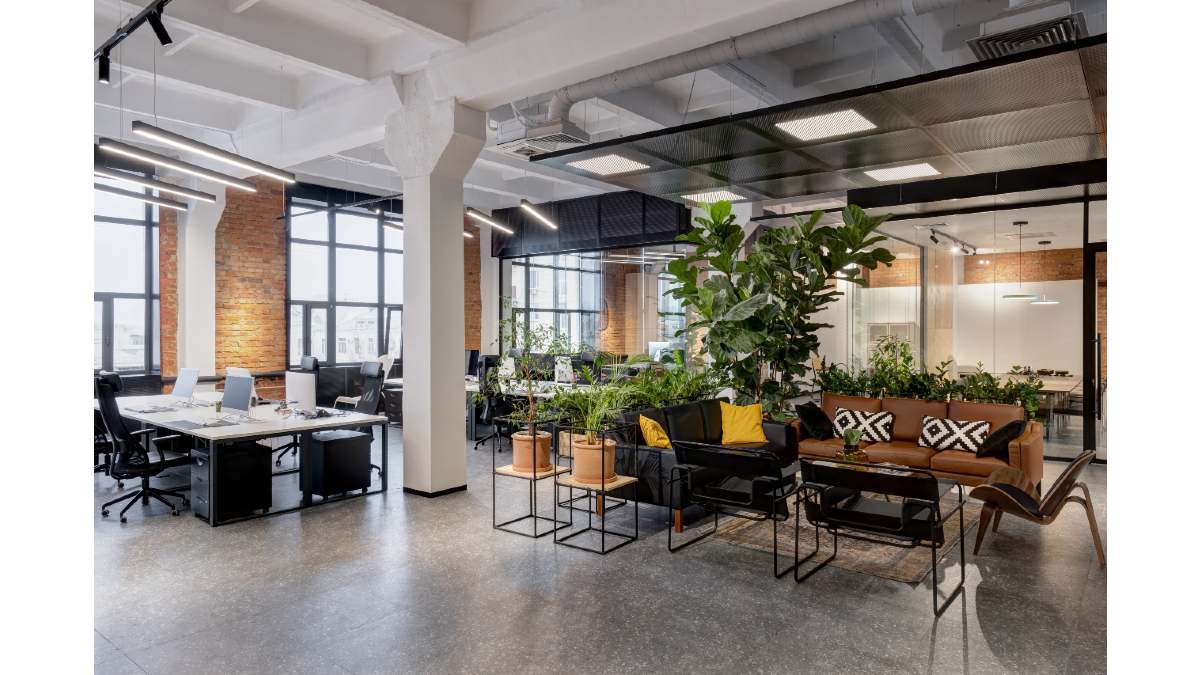
Latin America. Flexible workspaces, derived from the post-pandemic, are becoming increasingly relevant, not only in terms of the way they work, but also in terms of how they are configured, leased and operated, and have been part of the real estate offer in Latin America at least since 2009, estimating that in the last 12 years the flex space market grew 23%, per year.
This is highlighted in an analysis of flex Space, María Valdez, director of sales and change management of Facility Management at Newmark, whose president in Mexico and regional director for Latin America is Giovanni D'Agostino, and stresses that, initially, flexible workspaces were used mainly by startups and freelancers.
Now, as a result of the pandemic and the effects that have been generated in the way of working, more and more corporate users are considering the possibility of embracing this type of solutions. This has been accentuated by global geopolitical instability and the limitations of being able to invest capital in new locations by those companies that have been affected by exacerbated inflation and the crisis generated by the pandemic.
"Despite the unquestionable benefits offered by flexible spaces, it is important to note that there are challenges in their adoption. One of the main ones is the ability to align and permeate the organizational culture of a company through a flexible space, whose collective image is associated with a certain type of audience and product. In addition to this, there is always a possibility of impacting the loss or retention of talents, depending on the characteristics of the users and how the activities they perform align with the design and functionality of the spaces. To give an example, while a user of centennial spaces may be motivated by the possibility of choosing the workplace through a membership, a Gen X user, whose work involves long periods of concentration, will probably experience a shock in the way they perform their tasks in a collaborative space, without the possibility of making use of an assigned place. " indicates in his analysis María Valdez.
He adds that the first approach to explore the use of flexible spaces should be made through an approach of understanding the business itself and the ways of working of employees, through Workplace Strategy studies, which is key to ensuring success in the adoption of flexible spaces since there is no single recipe that guarantees a positive result in its adoption. To ensure a good result, it is important to know and understand in depth the organizational culture of a company, as well as to analyze the population, not only in terms of ages, preferences and proximity, but with respect to the activities carried out, the way of working, and the type of space required based on it.
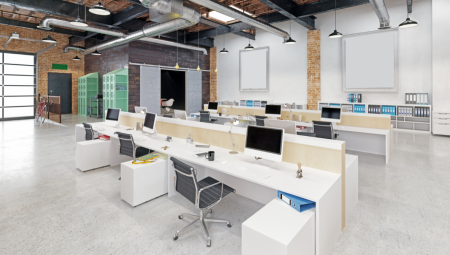
Now, flexible spaces (also known as Flex Spaces) can be understood in two ways:
- Workspaces whose design allows to carry out different activities thanks to its functional approach and, in some cases, possibility of reconfiguration.
- Spaces fully equipped for use, offered through suppliers, whose leases present considerable flexibility compared to the traditional model. They typically work through per-user memberships.
The benefits of flexible spaces, in any of its two modalities (or in a combined scheme) are:
- Ability to generate greater efficiency in the amount of space used by a company. Only the square meters that are needed are rented and used. This, in turn, generates efficiencies in the operating expenses of companies.
- The possibility of adapting the footprint of a company to the behavior of its business. That is, to be able to expand during times of growth, or contract if necessary.
- Greater freedom for employees, by allowing them to choose the conditions in which the work will be carried out: whether in an assigned workspace, a concentration room or a collective workspace; when a collaborator can choose the space that best suits the function of the work to be done, productivity increases.
- The possibility of adapting the lay-out of a space or portion of the workspace to the business need of the specific moment.
Once the need of a business has been analyzed, there are different ways to efficiently implement a solution that involves flexible spaces, so there are tools under development such as Optality (www.optality.com) that allow companies to make use of flexible spaces at any time, and anywhere, it is a dynamic portfolio solution that will allow companies to optimize the use of space through a mobile app where users can search and reserve workspaces among more than 5,000 locations in more than 70 countries.
The value of this tool will focus – in addition to the flexibility it gives – on the ability to provide cost optimization to companies, on the possibility of adapting a real estate portfolio (which allows generating a balance between flexible and traditional spaces) and on the information on the use of the space it provides to its users.
"While it is critical that every organization appropriates and shapes the future of its way of working, flexible spaces are and will continue to be a valuable alternative for companies and employees. This product, used in the right way, offers numerous benefits and is here to stay," says María Valdez, director of sales and change management at Newmark Facility Management.